

Memory prices are still rising through Apple's iPhone 18 launch window and will keep rising into 2027, according to a TechInsights analysis timed to the launch that puts a 96Gb LPDDR5 mobile DRAM part at about $165 in September against about $140 in June.
The firm's headline claim is blunt: "Memory cost per gigabit has roughly tripled since 2025, and TechInsights forecasts indicate prices will continue rising beyond Apple's September launch and into 2027." Decoded, that is a forecast built on TechInsights' own DRAM and NAND pricing trackers, which is the only source the post cites for its table, and the post does not say whether the figures are contract or spot, die or package, or whose prices they are. Treat the direction as the finding and the dollar figures as the firm's estimates.
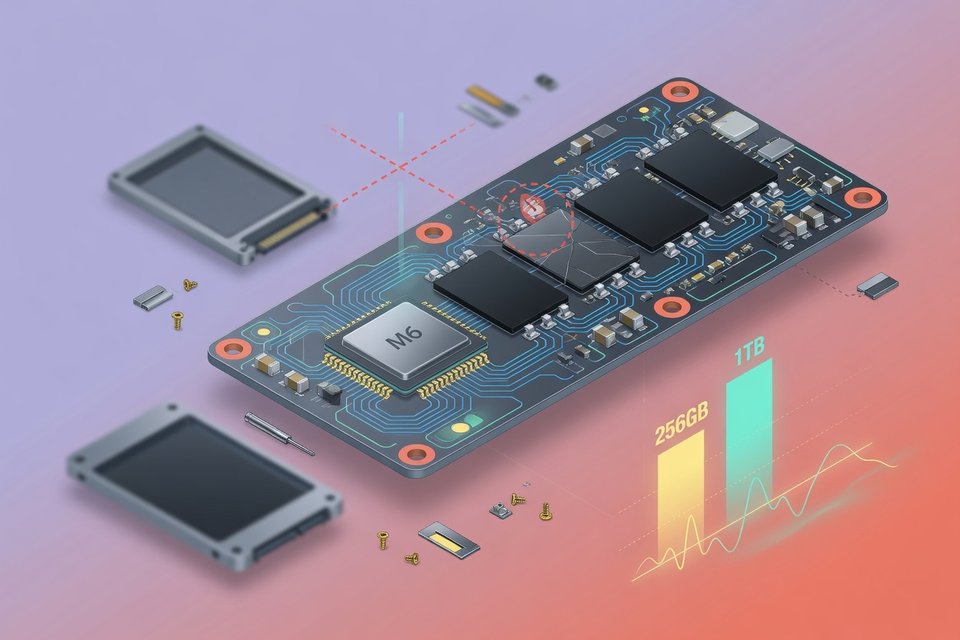
Its table gives three points: June 2026, September 2026 and March 2027. LPDDR5 at 96Gb density goes from about $140 to about $165 to about $183; a 256GB TLC UFS NAND part goes from about $68 to about $82 to about $92. By my arithmetic that is a rise of roughly 18 percent for the DRAM part and 21 percent for the NAND part over the summer, and about 31 percent and 35 percent respectively by next March if the forecast holds. Every figure in the table carries a tilde, which is the firm's own way of saying so.
TechInsights frames this as structural rather than cyclical. "This is not simply a short-term squeeze." It says memory now accounts for more than 30 percent of the bill of materials for a premium device and roughly 60 percent for devices under $400, and that suppliers "remain focused on higher-margin products and disciplined capacity expansion, sustaining tight supply conditions." Translated, the memory makers are not adding wafers to chase handset volume, and that restraint is what keeps the price curve pointing up.
The AI angle is where the post takes a position of its own. Average iPhone DRAM has passed 9 GB and 12 GB configurations are still growing, it says, and as prices rise, adding capacity gets expensive, so memory becomes a lever for premium-tier differentiation: "In other words, the memory ceiling could increasingly become an AI feature ceiling." That is a fair reading, and it cuts both ways for the suppliers: a 12 GB flagship is a bigger DRAM order per unit, but a mid-range phone held at lower capacity to protect its price is a smaller one.
NAND gets a separate warning. "NAND supply growth is becoming more dependent on process-node transitions than incremental wafer capacity as suppliers prioritize more profitable production." Meaning: new bits come from stacking more layers on existing lines, not from new fabs, so NAND can stay tight even if DRAM loosens. The post also names the tell to watch in supplier results: "If market value continues rising faster than underlying memory consumption, higher pricing rather than stronger device demand could increasingly be driving growth." Anyone reading the next round of memory earnings should put revenue growth next to bit growth and see which one is doing the work.
Bootnote: 96 gigabits is 12 gigabytes, so TechInsights' roughly $165 line is, near enough, the DRAM bill for the 12 GB handset configuration it expects to keep growing. The post does not say whether that is a die or a packaged-part price, which is the kind of footnote a cost analysis ought to carry.


Leave a Reply