
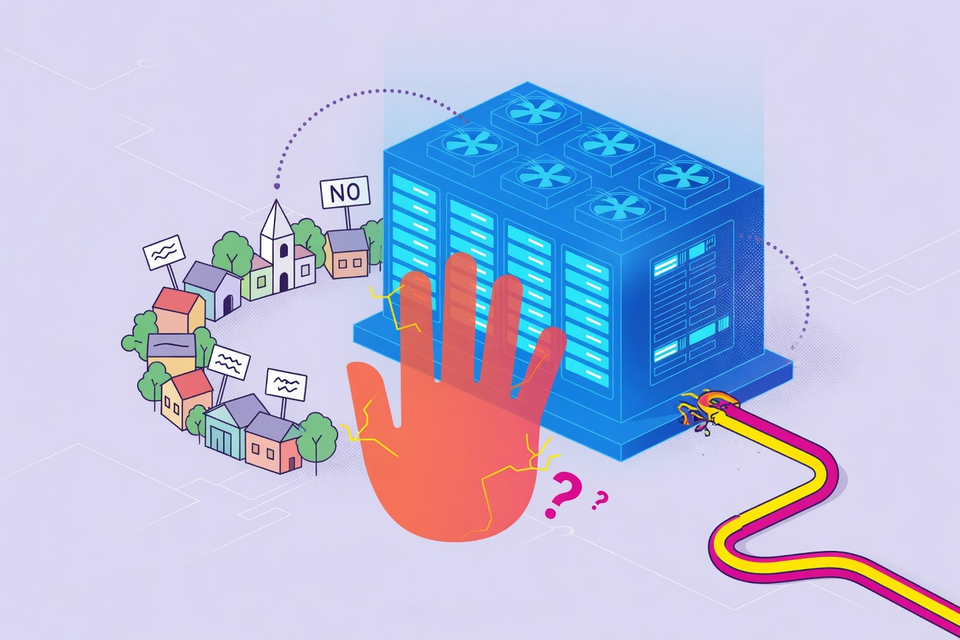
Berkshire Hathaway chief executive Greg Abel told CNBC that resistance to new data centers is spreading across U.S. communities, and that the conglomerate's willingness to power those sites comes with a condition attached. "There is a lot more pushback in the communities across the U.S.," Abel said.
CNBC reports that Berkshire's interest in the buildout is mostly about generating and supplying electricity for the sites rather than owning them. Abel put the condition plainly. "We are interested in serving these hyperscalers… if there was no impact to the rates of our other customers," he said.
For a buyer, that condition is the operational detail behind the quote. A utility that will take on hyperscale load only when existing ratepayers are held harmless is describing a contract structure: the data center customer funds the generation and grid upgrades it triggers, or the deal does not happen. CNBC's account gives no detail on how that test would be applied to a specific contract, or on the size of the load Berkshire is being asked to serve.
The pushback Abel describes has numbers behind it. An Economist/YouGov poll conducted August 28 to 31 finds that 63% of Americans would somewhat or strongly oppose a new data center in their community, against 19% who would support one. Asked about the country as a whole, 51% call new data center construction a bad thing and 20% a good thing. Opposition to a local project runs at 71% among Democrats and 66% among independents, and about half of Republicans, 52%, would oppose one too.
Electricity bills are the stated worry. Sixty percent of respondents expect a data center in their community to raise their electricity costs, and only 14% expect no effect. Nearly half, 46%, expect a local data center to lower home values, against 10% who expect it to raise them. YouGov's write-up does not give a sample size or a margin of error, so the precision of those figures is unknown.
State legislatures are already acting on the same sentiment. CNBC reports that New York State has enacted a moratorium on data center construction, that many other states have pending bans and restrictions of varying intensity, and that about 4,700 data centers now operate in the U.S. CNBC also cites a Mizuho note to clients, written by analyst Vikram Malhotra, saying some investors think data centers could become a significant issue in the midterm elections, with questions about resource consumption and how many long-term jobs the facilities create.
Abel is describing a power seller's terms, the poll describes the neighbours, and the moratoria are those neighbours' terms written into law. None of them settles what a given site will pay for its interconnection. That number sits in the utility's tariff and the interconnection agreement, which is where a buyer would look next, along with the county's zoning calendar.
For an infrastructure buyer, the practical change is that the cost of serving a new site is moving from the utility's general rate base onto the project itself, and the political calendar now bears on approval timelines. Contracts that spell out who funds generation and grid upgrades, and siting plans that survive a county vote, are the documents that decide whether a project proceeds.



Leave a Reply