
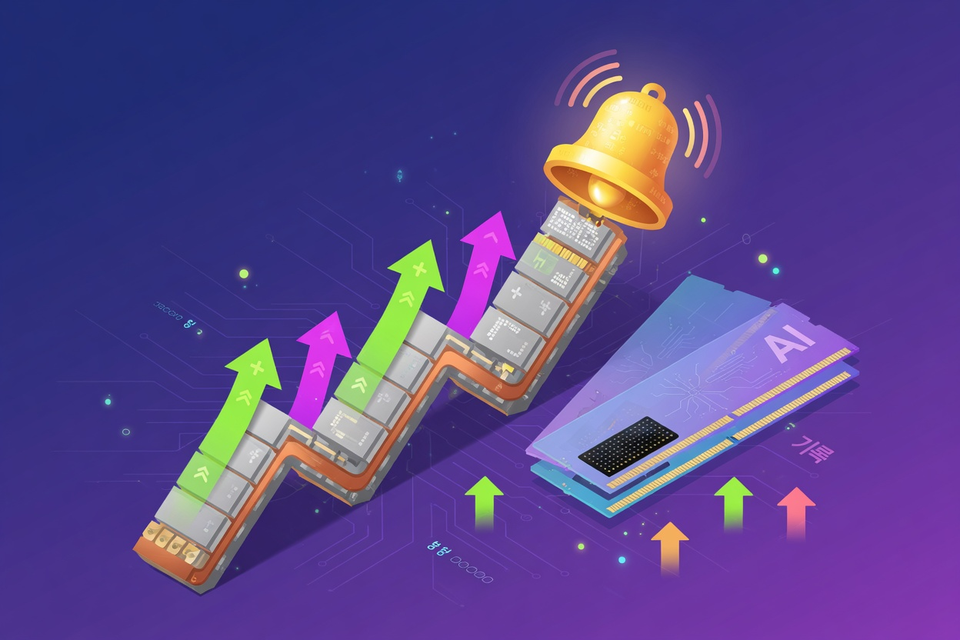
SK Hynix has posted record revenue, and a report from Proactive financial news, read through Google News, credits the result to an AI memory boom that has pushed DRAM prices higher.
That is the whole of what Proactive's headline says, and it is a narrow statement. The revenue total, the quarter it covers, the operating profit, the margin and the number of bits shipped are all unknown. Proactive attributes the record to price, and nothing in its headline says anything about volume one way or the other.
A record built on price still deserves a different reading from a record built on shipments, and the distinction is this writer's, not Proactive's. Price-led revenue growth means customers paid more for each bit, which lifts the top line without requiring new fab capacity to come online. Volume-led growth means more wafers out the door, which takes capital and time. Memory makers prefer the first kind for as long as it lasts, because it flows almost straight to operating profit.
For readers newer to the memory trade, the AI memory in question is overwhelmingly HBM, the stacked DRAM bonded beside accelerator dies. It is sold on long contracts rather than the spot market, so when a memory vendor's revenue is credited to higher DRAM prices in an AI context, the plausible mechanism is contract pricing on HBM and the pull that HBM demand puts on conventional DRAM supply. Whether that is the mechanism at SK Hynix this quarter is unknown until the company's own figures are read.
The cycle also carries a memory. Price-driven records in DRAM have historically been followed by capacity additions across the industry, and those additions have historically ended the pricing run. Any claim about where this cycle goes would be a prediction, and the company's capex guidance, once it is public, would be the first place to look for it. If guidance rises sharply, the company would be betting that demand outlasts the new supply. If it holds flat, the company would be signaling that it expects to harvest price rather than chase volume.
The useful test, once the full results are available, is whether operating margin moved with revenue or ahead of it. Margin rising faster than revenue would confirm that price did the work. Margin rising in step, or lagging, would suggest cost or mix is eating part of the price gain, and that would be the more interesting story for anyone watching how long the AI memory premium can hold.



Leave a Reply