
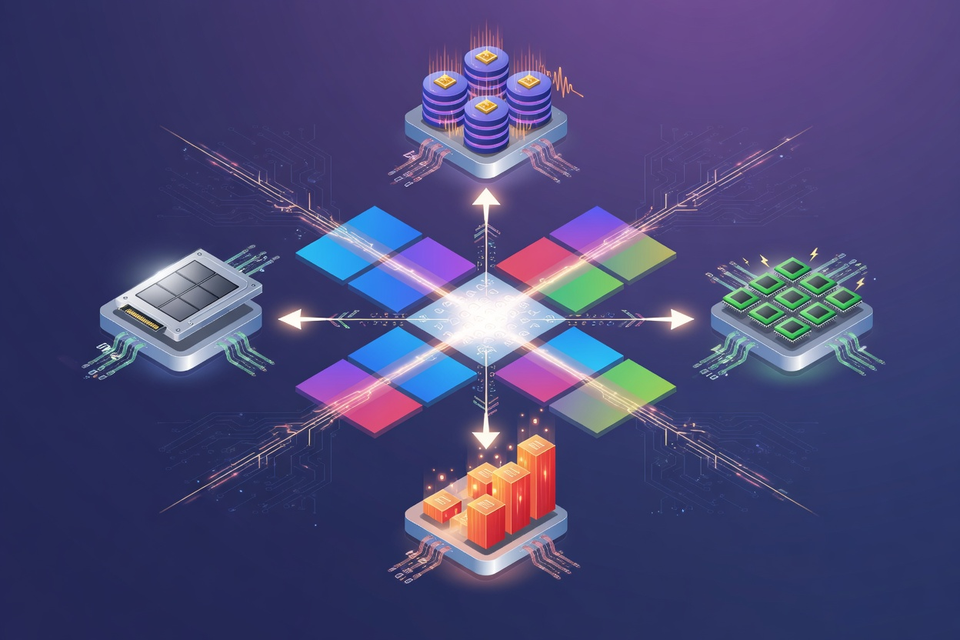
The case for Micron in this memory cycle, as a TradingView market item carried by Google News frames it, is breadth: expanding roadmaps across DRAM, HBM, NAND and storage, all pointed at the same AI demand wave.
Breadth is the interesting word there. A roadmap that widens in four directions at once is less a technology statement than a capital allocation statement. Roadmaps are the cheapest thing a memory company produces. Wafer starts, cleanroom space and advanced packaging lines are not. The question a four-segment pitch raises is not whether Micron has plans everywhere but whether its fabs can feed all of them at the same time.
HBM sits at the center of that question. Every die Micron stacks into an HBM package is wafer supply that will never ship as standard DRAM, so a roadmap that expands both at once has to answer where the incremental bits come from: new capacity, node migration, or share pulled from somewhere else in the product mix. That answer lives in capex guidance and bit-growth targets rather than in roadmap language.
AI-driven demand is doing similar work on the other side of the framing. HBM attaches directly to accelerators, and its demand shows up in design wins and supply agreements with named customers. NAND's connection to AI runs through data pipelines, checkpoints and training corpora, a real but looser coupling. Bundling all four segments under one demand driver blends a market with contracted visibility into markets where the demand is still an inference.
Samsung and SK Hynix face the same arithmetic, which moves the competitive question away from whose roadmap reads widest and toward whose capacity converts first. In memory, a plan announced is a plan every rival can match in a press release by Friday. A plan funded is harder to copy.
History argues for reading four-way expansions carefully anyway. The memory industry's pattern across cycles has been to widen output plans at the top of a demand wave and absorb the pricing consequences at the bottom. Whether this cycle breaks that pattern would depend on how much of the AI demand behind these roadmaps is under contract rather than projected.
What turns a roadmap into a result is a short list: capex figures, bit-growth guidance, qualification wins, and ship dates that survive an earnings call. Until those attach to the DRAM, HBM, NAND and storage lines Micron is sketching, an expanding roadmap is a direction of travel, not a delivery schedule. Demand gets met in silicon, and silicon gets counted quarterly.


Leave a Reply