
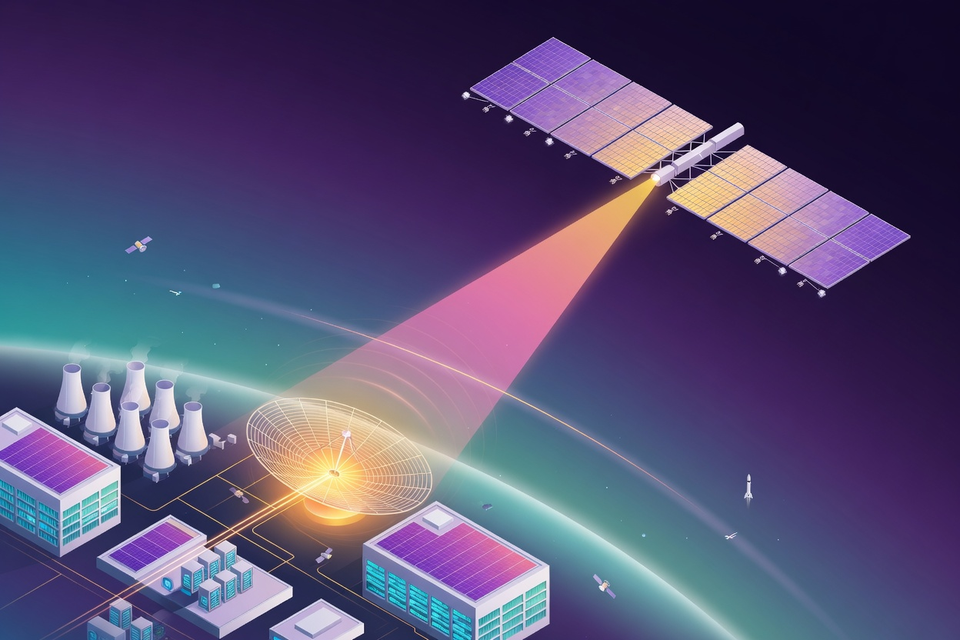
Overview Energy is making the case that data centers could draw power from solar collectors in orbit rather than from the grid alone, in a Data Center Dynamics studio interview in which Abdullah Al-Shakari of the company discusses space-based solar power beaming, a near-infrared transmission method, and partnerships with Meta and the US Air Force.
The idea predates the AI buildout. Space-based solar power collects sunlight above the atmosphere, where a panel is not interrupted by night or weather, and transmits the energy to a receiver on the ground. Data Center Dynamics frames the pitch as a way past the limits of terrestrial solar, which for a facility operator means the intermittency that forces a solar-backed site to lean on batteries, gas turbines or grid imports once the sun sets.
What distinguishes the Overview Energy approach, as described by Data Center Dynamics, is the use of near-infrared light to carry the energy down. The wavelength matters to a facilities engineer because it shapes the size and type of ground receiver and how the link behaves in cloud, haze and rain. What Overview Energy assumes on both counts, and what it has demonstrated, is unknown.
Two names stand out in the interview description: Meta and the US Air Force, both listed as partners. The form of those relationships is unknown. A research agreement, a pilot contract and a purchase commitment are very different things to a buyer trying to judge whether a technology is close to the fence line, and no dollar figure, scope or delivery date attached to either partnership is confirmed.
For an infrastructure buyer, the figures that decide whether this is a procurement option or a research program are the same ones any power contract answers. How many megawatts arrive at the site, at what capacity factor, at what price per megawatt-hour, on how much land for the receiver, and starting when. None of those numbers is confirmed for Overview Energy's system.
The comparison a buyer would run is against the supply options already on the table: a grid interconnection with its queue, on-site gas generation, or a conventional solar power purchase agreement paired with storage. Each of those carries a known cost and a known reliability profile. An orbital supply would have to beat them on at least one axis, and it would also need to clear regulatory questions about beaming energy through airspace that a ground-based plant never faces.
Any new power source gets a hearing from data center engineers because power supply, more than floor space or chips, now sets the schedule for a new campus. Until Overview Energy publishes delivered capacity, pricing and a first-delivery date, that comparison against grid power, on-site generation or a conventional solar contract cannot be run.

Leave a Reply