
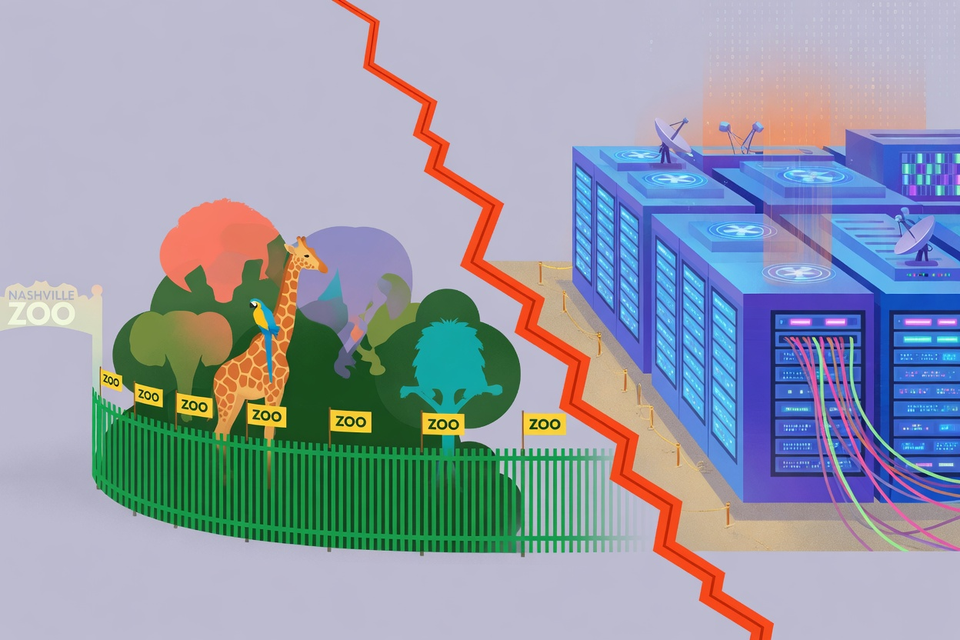
The Nashville Zoo has launched a petition opposing a proposed data center that would sit within feet of its grounds, escalating a siting dispute that WSMV4 reports has already drawn a formal statement of opposition from the zoo and growing community pushback.
The project at issue is a proposed single-story building of 69,220 square feet at 648 Grassmere Park in South Nashville, according to the permit application WSMV4 reviewed, filed by Jeremy Dreiling. The station reports the facility is known as the DC Blox Data Center and that a separate permit has been filed to demolish two existing buildings on the site. If approved, WSMV4 reports, it would join more than two dozen data centers already operating in Nashville.
Opposition from the zoo is unambiguous. A zoo spokesperson told the station the organization is vehemently opposed to the proposed data center being built next to the zoo, and said it is working with community partners to determine how to protect its property, animals and surrounding neighborhoods. The petition, launched on Change.org, argues that data centers are being built at an alarming pace, that no studies or environmental impact assessments have been shared with the community, and that the site abuts one of the region's most fragile collections of animals.
For operators and developers, the notable detail is what the petition says is missing rather than what it claims will happen: the zoo's core complaint is the absence of published studies, impact assessments or use-specific safeguards, which is the gap that turns a routine permit into a public fight. WSMV4's reporting places the fight in a national pattern of community backlash over the facilities' electricity and water needs and their effects on surrounding environments and grids.
The zoning context matters as much as the sentiment. Nashville already hosts a substantial data center footprint, and the fight is not over whether the industry belongs in the city but over proximity to a singular neighbor: an animal collection the zoo describes as among the most fragile and rare in the country. Construction-phase noise and vibration, ongoing mechanical noise, and water and power draw are the categories of concern such neighbors typically raise, and none of the reporting indicates the developer has published mitigation plans for them yet.
The coverage reviewed carries no statement from the permit applicant, so the developer's side of the record remains unwritten here. Site selection teams should file this one as a live example of adjacency risk: a parcel can be zoned, priced and powered correctly and still carry a neighbor whose constituency can fill a hearing room. The cheapest mitigation remains choosing the parcel where nobody has to sign a petition at all.



Leave a Reply