
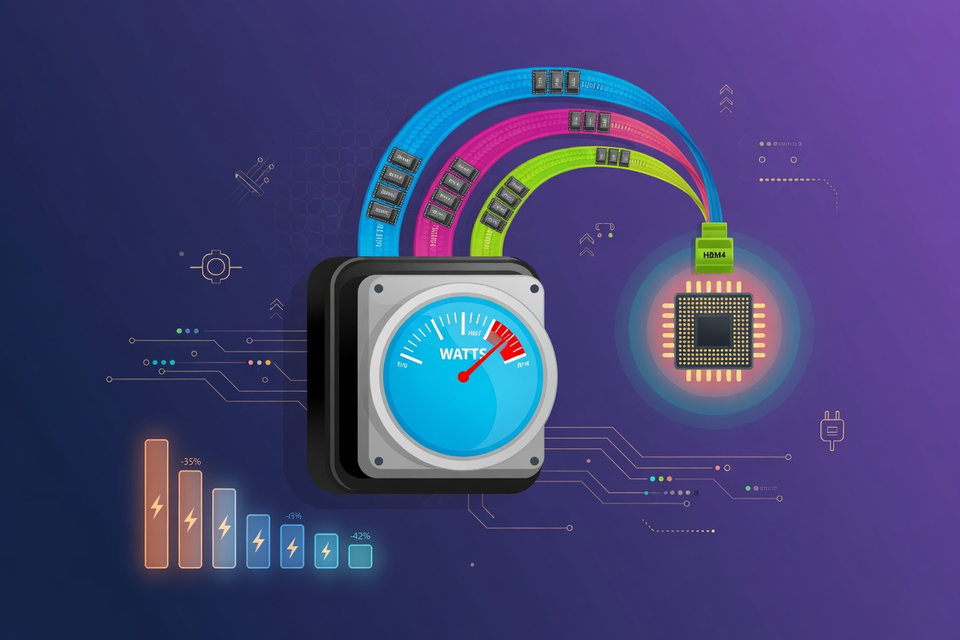
The pitch Micron is making to the people building AI data centers has moved off raw speed and onto the electricity meter. In a Counterpoint Conversations interview published by Counterpoint Research, Vijay Nain, Micron's senior director for emerging technologies and ecosystem development, took Counterpoint research VP Neil Shah through a memory lineup argued almost entirely in watts.
Start with the acronym doing the heavy lifting. HBM, high bandwidth memory, said letter by letter, is what happens when you stop laying memory chips out flat across a board and start stacking them in a tower right beside the processor. Shorter trip for the data, more lanes to travel in, and far less energy burned shoving bits down long copper roads.
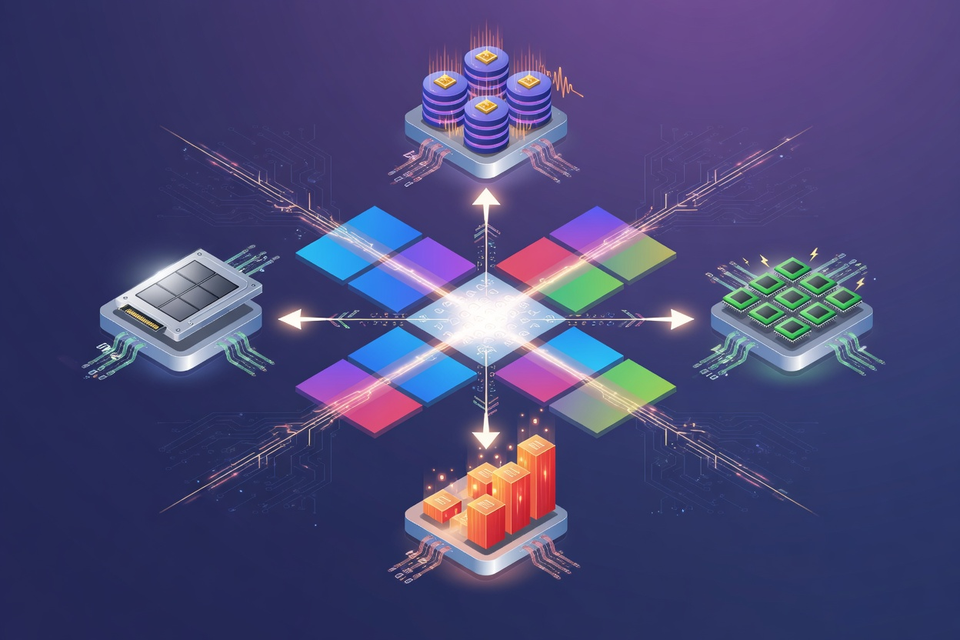
Micron says HBM4 is now in volume at 36GB, with a 48GB version sampling. Next to it sits SOCAMM2, a low power DRAM module the company says scales to 256GB, and the 9650, which Micron bills as the industry's first PCIe Gen 6 enterprise SSD.
Then come the efficiency claims, and this is where the interview gets interesting. HBM4 is pitched at roughly a 20 percent generation-on-generation gain over HBM3E. HBM3E itself is described as around 30 percent more efficient than the competition. SOCAMM2 is said to draw about a third the power of a comparable DDR5 module in about a third the footprint, PCIe Gen 6 drives to reach up to twice the performance per watt, and capacity SSDs to run up to sixteen times more efficiently than hard disks.
Every one of those figures carries the same two-word credit line on Counterpoint's page: Source: Micron. None arrives with a test methodology, a named competing part, or a stated workload. That is not an accusation, it is the shape of the evidence, and anybody sizing a rack off these numbers should know which side of the table they came from.
What the claims are aimed at is real enough. Counterpoint's analysts frame the problem as the memory wall, the point where a model grows big enough that the processor spends its day waiting on data instead of computing on it, and they note Micron's HBM has qualified for leading XPUs such as Nvidia's Vera Rubin.
The flash half of the story is quietly the more interesting one. Long-context agentic inference generates an enormous KV cache, the running scratchpad holding everything the model has already read, and that scratchpad has to live somewhere cheaper than HBM and faster than a spinning disk. Micron's answer is to push it down onto Gen 6 flash and let capacity rather than bandwidth absorb the problem.
Which leaves the obvious test. A 30 percent efficiency edge over unnamed competition stays a marketing number until somebody outside Micron runs the same workload on the same rack and publishes what the wall socket said.



Leave a Reply