
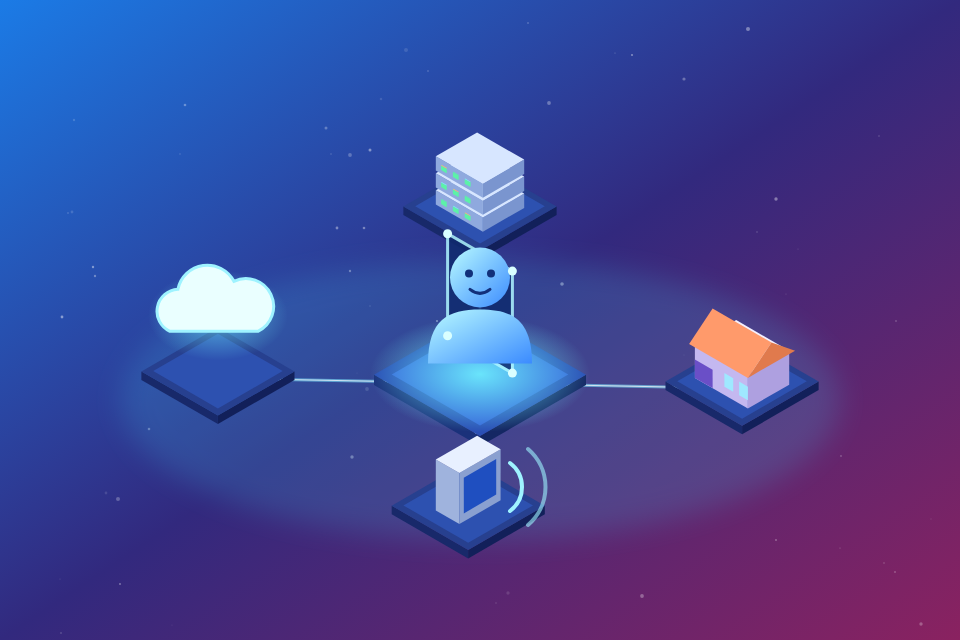
Napster, the name that once stood for music file sharing, has announced several partnership and product announcements since July. They span Microsoft Azure, in-country AI hosting in Saudi Arabia, schools in the United Arab Emirates and, most recently, a deal with HUMAIN, a PIF company delivering full-stack artificial intelligence capabilities globally. Chief executive John Acunto summed up the change in a Bloomberg Television interview: “We are going from streaming music to streaming intelligence.”
The company that Infinite Reality bought for $207 million last year, Bloomberg reported, no longer streams music. It now sells AI agents with video presence, persistent voice and memory, and Microsoft is the thread that runs through nearly all of it.
The relationship goes back to last September, when Napster said it was among the first to run Azure AI Foundry’s Realtime API in production, with plans to sell through Azure Marketplace and Microsoft’s global systems integrator network. “Microsoft Azure AI Foundry continues to enable innovative companies like Napster,” said Zia Mansoor, corporate vice president of Cloud and AI Platforms at Microsoft.
In November came the first named customer story. Built on Azure OpenAI, Azure AI Foundry and Azure Kubernetes Service, the pilot had the consultancy Leading Results create AI coaches for its client Cooper Parry, a UK accounting firm. The coaches were trained on the firm’s values and ways of working. “It wasn’t an off-the-shelf product; we could train it with everything about Cooper Parry,” said Sarah Holland, the firm’s lead coach.
The product took its current shape on May 18, when Napster launched its API as an Azure-exclusive offering: a proxy layer on top of real-time agents built on Microsoft Foundry that adds an interactive video avatar without changing the agent’s code. “Napster’s API gives developers a practical path to video-enabled agents without starting from scratch,” said Balan Subramanian, general manager of Foundry Apps and Agents Platform Services at Microsoft. Napster took it to Microsoft Build in San Francisco in June, with a booth, a lightning talk by chief technology officer Edo Segal, and a global developer hackathon. Microsoft’s Partner News blog had a public preview of the Napster API posted by late May.
On August 19, Napster added phone support. Agents can answer calls on a company’s existing SIP telephone systems, in any language, around the clock, and hand off to a person when needed. The API is sold through the Microsoft Marketplace, where customers can apply their Azure Consumption Commitment, and through Microsoft partners under a resale offer. “Napster API runs natively inside Azure, right beside its own tools,” Acunto said. “Napster API gives Microsoft Azure customers a straightforward way to find, buy, and deploy agentic AI,” added Rick Lievano, Microsoft’s worldwide chief technology officer for telecom and media.
Microsoft’s own documentation shows how deep the integration runs. The Azure Native Integration lets customers provision Napster from the Azure portal with no separate sign-up, pay on their monthly Azure invoice, sign in with Microsoft Entra ID, and manage the resource alongside the rest of their Azure estate. It supports Omniagents, persistent agents that keep one identity, knowledge base and memory across video, voice, text and telephony. Microsoft has since announced general availability of that integration, and Napster’s will be demoing these products at this year’s Microsoft Ignite, which runs November 17 to 20.
The other deals follow the same pattern: Napster supplies the agents and a local partner supplies the infrastructure. In Saudi Arabia, Napster, DETASAD and Lenovo announced on July 30 AI infrastructure that runs entirely inside the Kingdom. On September 1, Napster, Nourah Cloud and Princess Nourah bint Abdulrahman University signed agreements for an education center of excellence, with Nourah Cloud hosting Napster’s model and training planned for 24 public universities. Napster then incorporated locally, with support from the Ministry of Investment and AstroLabs. “You cannot serve a market like Saudi Arabia from the outside,” Acunto said.
The most recent announcement is the HUMAIN partnership, in October. HUMAIN is a PIF company that sells data centers, cloud platforms and Arabic language models. Napster gets API access to its ALLAM model and to real-time Arabic speech recognition and synthesis, and the two will build Arabic-native “digital employees” for Saudi and wider Middle East clients, with further deployments planned through 2026. “The next generation of AI must be native to the markets it serves,” said HUMAIN chief executive Tareq Amin.
The UAE work moved in parallel. On September 10 Napster and Dubai-based Kameha Ventures announced a partnership to make the UAE Napster’s regional hub. Six days later came GEMS Education, with more than 200,000 students, where the first phase builds digital twins of teachers at one school, with a working solution targeted before the end of 2026.
That is why the cadence matters. In about ten weeks Napster added in-country hosting, a Saudi legal entity, a UAE hub, a large school network and a PIF-owned model supplier, on top of a Microsoft channel that reaches customers through the Marketplace and resellers. Each lets a customer buy the same product without Napster building data centers or training models for every market.
The regions it is moving into are large and growing. Gartner forecasts Middle East and North Africa IT spending at $169 billion in 2026, up 8.9%, with software at $20.4 billion and data center systems rising 37.3% to about $13 billion. Analysys Mason expects AI data center investment in the Gulf to reach $5 billion to $7 billion this year, with more than $30 billion announced through 2030. HUMAIN itself plans to bring 250 megawatts online by the end of 2026 and 1.7 gigawatts in 2027, Enterprise AM reported.
Capacity like that needs software to fill it, and the demand side is shaped by policy. The UAE Cabinet approved a federal framework in May that supports a plan to move half of government services and operations to agentic AI models within two years, according to the Kameha Ventures release. In Saudi Arabia, Lenovo’s go-to-market work with Napster targets government, defense, education, technology and investment customers.


Leave a Reply