
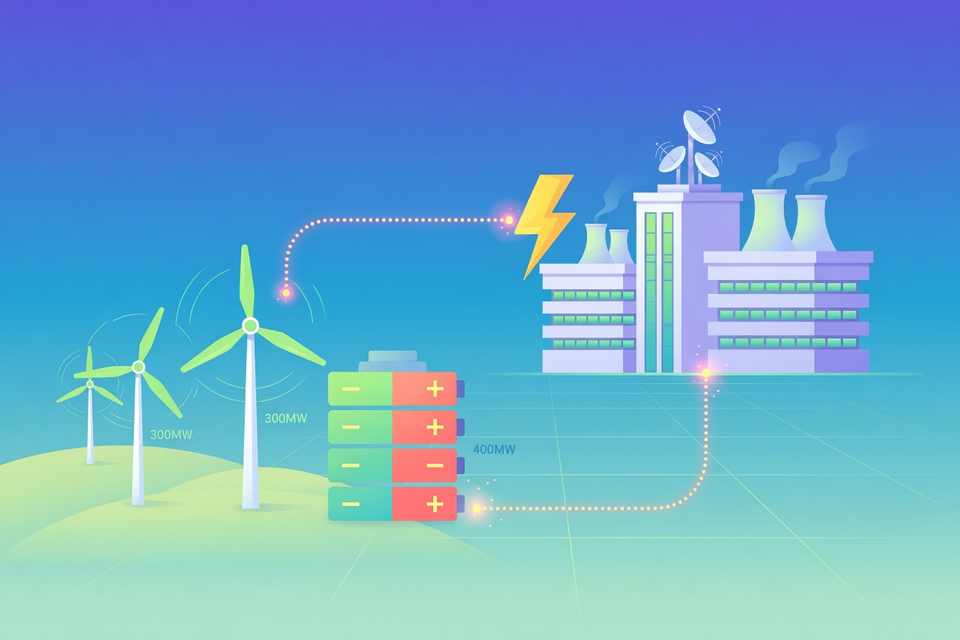
Minnesota Power has reached an Electric Service Agreement with Google covering a planned data center in Hermantown, and says the arrangement will enable 700 megawatts of new clean energy resources on its system, made up of 300MW of wind generation and 400MW of battery storage.
That 700MW figure is a generation and storage number, not a demand number. It describes what Minnesota Power expects to add to its own system alongside the project. Neither the utility's release nor the City of Hermantown's says how many megawatts the data center itself would draw, at first energization or at full build.
Rate treatment is the part with the clearest detail. The facility would be served under an existing regulated rate structure, which the utility says complies with the Minnesota law requiring that existing customers do not pay the costs associated with connecting and serving a new large customer. Minnesota Power adds that the agreement includes new power infrastructure development funded by Google, and that Google will contribute $5 million in energy impact funding toward affordability and efficiency programs for low to moderate income residential customers.
A second payment sits outside the contract. Under the 2025 Minnesota data center energy law, the utility says the facility will contribute millions of dollars annually to the statewide energy efficiency and weatherization program. No figure is attached to that commitment in either release.
Terms that a buyer would normally want are not yet public. The utility says the agreement will be filed with the Minnesota Public Utilities Commission for public and regulatory review and approval later in March, which means the contract length, the rate, the contracted demand and any ramp schedule remain unpublished until the docket opens. Minnesota Power also says the two parties will work together to identify demand flexibility capabilities that could reduce grid strain at peak times, without describing what those would be or whether any curtailment obligation is binding.
On the city side, Hermantown issued its own release confirming Google as the developer and pointing to the region's climate, its local workforce and the utility's grid as the reasons for the choice. "Today’s announcement is important and exciting, and while there are additional public process steps to take, we look forward to taking them alongside such a well-respected, community-focused partner," said John Mulder, Hermantown City Administrator. The city does not enumerate the remaining steps, and the regulatory filing described by the utility is only one of them.
Some context on the host system is useful. Minnesota Power serves roughly 150,000 customers and 14 municipalities across a 26,000 square mile territory in northeastern Minnesota, and says customers receive over 60 percent of energy from renewable sources today. The utility publishes no siting detail for the new wind or the new storage, and no in-service date for either.
For infrastructure buyers watching how large loads get connected, the structure here matters more than the megawatts, with an existing regulated tariff, interconnection paid for by the customer, a named affordability contribution and a regulator review all on the record. The numbers that would let anyone size the load, price the power or judge the timeline are not in either document, and the Minnesota Public Utilities Commission docket is where they would first appear.




Leave a Reply