
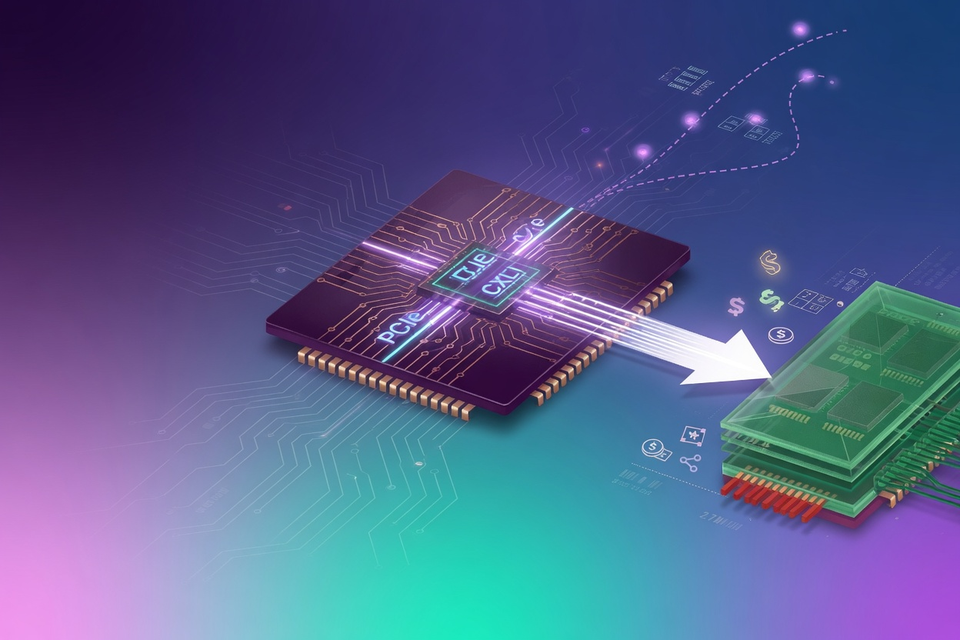
Marvell has closed its purchase of XConn Technologies, a designer of PCIe and CXL switching silicon, and the receipt is more interesting than the headline number. The deal was valued at about $540 million when it was struck, split roughly 60 percent cash and 40 percent stock, and completing it pulled $325 million out of Marvell's cash balance while adding about 2.7 million shares to its diluted share count.
Start with PCIe, short for Peripheral Component Interconnect Express, which almost everyone pronounces P-C-I-E because nobody has time for the full name. Think of it as the road network inside a computer, the thing a graphics card or an SSD plugs into. A switch is the interchange on that road. More ports means more devices moving data at the same moment instead of queueing politely behind one another.
CXL, said letter by letter, stands for Compute Express Link and rides on those same roads. Its trick is memory. Normally each processor keeps its memory in its own cupboard, so if one runs short while its neighbour has spare, nothing can be done about it. CXL lets a system treat memory as a shared pantry, which starts to matter a great deal once the model you are running is larger than any single machine.
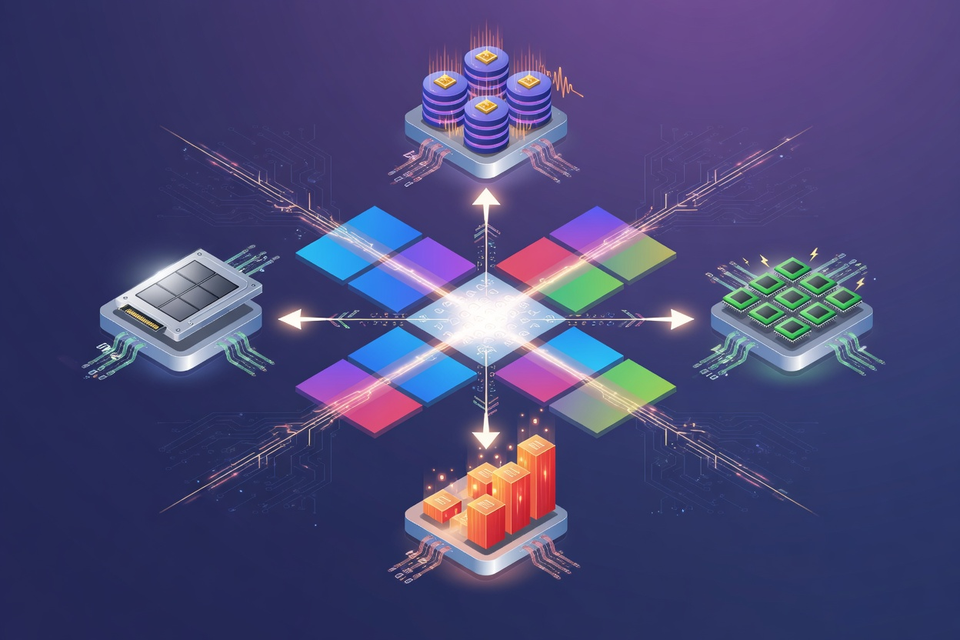
XConn's engineers and switch designs now feed a roadmap built around UALink, an open industry standard for what the trade calls scale-up connectivity. The aim is to wire many accelerators together so they behave like one much larger accelerator. Marvell's stated argument is that data center design has moved from single racks to multi-rack systems, and at that size the fabric between chips becomes the thing that decides how well the whole machine works.
"This combination creates a compelling switching platform for accelerated infrastructure, advancing Marvell's connectivity strategy for next-generation AI and cloud data centers," said Matt Murphy, chairman and chief executive of Marvell, when the two companies announced the deal. Underneath the phrasing sits an ordinary build-or-buy decision. The company already sold CXL memory-expansion controllers and already had a switch team. It did not have shipping PCIe and CXL switch chips, and now it does.
The money shows how patient this bet is. First revenue from XConn is expected in the third quarter of Marvell's fiscal 2027, reaching a $50 million annualised run rate by the fourth quarter of that year and $100 million in fiscal 2028. Against that, the acquisition adds roughly $25 million a year in non-GAAP operating expenses and takes about $12 million a year off other income, because cash that used to sit earning interest is now a switch business.
None of this is a science project. Marvell has said XConn's PCIe 5 and CXL 2.0 switches are in production, its PCIe 6 and CXL 3.1 parts are sampling, and that XConn is engaged with more than 20 customers.
The question worth watching is whether UALink turns out to be the fabric that multi-rack AI systems settle on. Buy the switch team early and you own a piece of that plumbing. Guess wrong and you have spent half a billion dollars on a very fast interchange to a road nobody drives on.


Leave a Reply