

Astera Labs has opened a chip design center in Israel, with offices in Tel Aviv and Haifa, and handed it one of the least glamorous jobs in artificial intelligence: moving data between processors quickly enough that very expensive silicon is not left sitting idle.
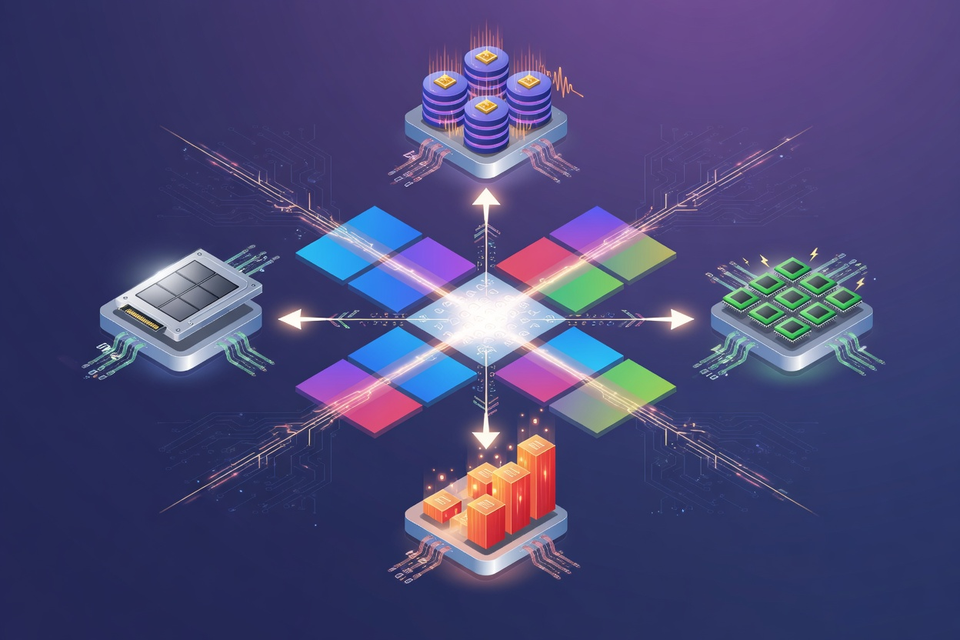
The San Jose company makes connectivity silicon, which is a polite way of saying it builds the on ramps, merge lanes and traffic signals inside an AI rack. Its Intelligent Connectivity Platform spans PCIe, CXL, Ethernet, NVLink Fusion and UALink, wrapped in a software suite called COSMOS. CXL is said letter by letter, and its purpose is to let a processor reach a pool of memory that is not bolted directly to it, rather like a shared kitchen fridge instead of a mini one in every room.
Founded in 2018 by three Texas Instruments veterans, the company started out selling chips that amplify and clean up data signals as they travel across high speed server connections, a description The Times of Israel puts in almost those words. Rack scale AI turned that quiet job into a large market, because hundreds of accelerators now have to behave like one machine.
Running the new site is Guy Azrad, senior vice president of engineering and general manager of Astera Labs Israel. He arrives from Google, where he was vice president of chip design engineering for compute silicon, and before that led Marvell's global Ethernet switching division. "We're building an engineering team with a strong focus on execution, covering hardware, silicon, and software solutions, to support the growing adoption of Astera Labs' Intelligent Connectivity Platform," Azrad said in the announcement.
Joining him as vice president of ASIC engineering is Ido Bukspan. An ASIC, said as AY sick, is a chip built for exactly one job rather than a general purpose processor that will attempt anything and do most of it badly. Bukspan spent more than two decades across Mellanox Technologies and NVIDIA, rising to senior vice president of chip design and working on InfiniBand, Ethernet and NVLink. Most recently he ran Pliops, a data acceleration company, as chief executive. On joining, he said this of the company: "I see the same drive, the same intensity to deliver highly performant connectivity solutions at Astera Labs."
Hiring is the real substance of the announcement. The Times of Israel reports that the company has taken office space in both cities and plans to add hundreds of employees by the end of 2027, against a worldwide headcount the same report puts at more than 700.
Technically, the brief is next generation scale up fabrics and research aimed at memory bottlenecks in AI training and inference. Scale up means wiring a cluster of accelerators together so tightly that software can treat them as one enormous chip, and it is the layer where the company says the constraint now sits. The parts are fast. What sits between them frequently is not.
Collaborations with Israeli universities and the local venture ecosystem are promised as well, which is either the start of a hiring pipeline or a sentence in a press release, and the difference will show up in job postings rather than in the announcement itself.
No product, no date and no benchmark came with any of this. What came instead was a payroll commitment in the country where several of the engineers who built InfiniBand and NVLink already live, which says something more concrete about where the company expects the next bottleneck than a roadmap slide would.


Leave a Reply