
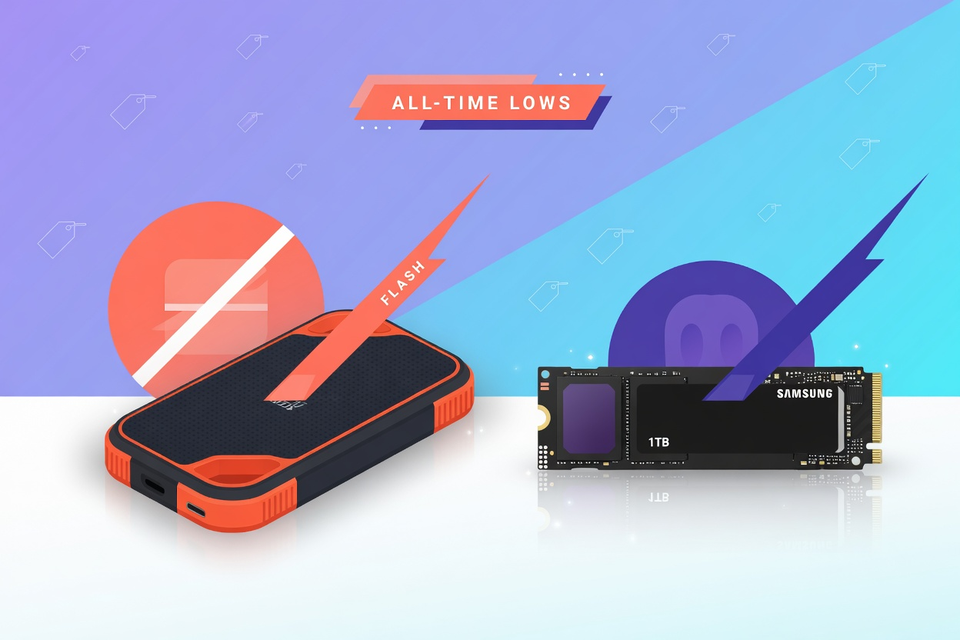
Amazon has cut the price of a rugged SanDisk portable SSD by nearly 30 percent, a discount ZDNET reports as an all-time low for the drive.
It is not the only flash record on the retailer's books. Kotaku reports that Amazon's price on the Samsung 990 1TB NVMe SSD has also dropped to an all-time low. That drive sits in Samsung's consumer client line, the kind of hardware that lands in gaming rigs and laptop upgrades rather than servers. Two consumer flash products, two record lows, one retailer, one news cycle.
Both numbers deserve a provenance note before anyone builds a thesis on them. The prices are Amazon retail listings as read by two deal desks, not anything SanDisk or Samsung published. The nearly 30 percent figure measures the discount against the listing's reference price, and the all-time low label is a price history characterization of the kind deal writers pull from tracking tools, not a statement from either manufacturer. These are retail spot observations and should be treated as exactly that.
The distinction matters because retail spot pricing and NAND contract pricing are different markets that happen to share a raw material. A portable drive's Amazon price moves on channel inventory, promotion calendars, and competition among third-party sellers. Contract prices for NAND and enterprise SSDs get negotiated between suppliers and large buyers on their own cadence, and nothing on a consumer deals page reaches that table. A record low on a rugged portable drive says nothing about what a hyperscaler pays per terabyte.
Still, the deals are a datapoint worth filing. Consumer SSDs are where excess channel inventory goes to die, and sustained record lows across retail SKUs would be one visible symptom of suppliers pushing bits into the consumer channel. The opposite pattern, retail prices climbing while the deal desks go quiet, would point to bits being pulled toward enterprise demand instead. Which regime the market is in cannot be read from these two listings.
For now the honest reading is narrow. Amazon is discounting a SanDisk portable drive and a Samsung client NVMe drive harder than it ever has, the price trackers noticed, and that is the whole story so far. Two SKUs at one retailer do not make a trend, and anyone trying to extract NAND strategy from a deals page should wait for contract price data before drawing a line through two points.



Leave a Reply