
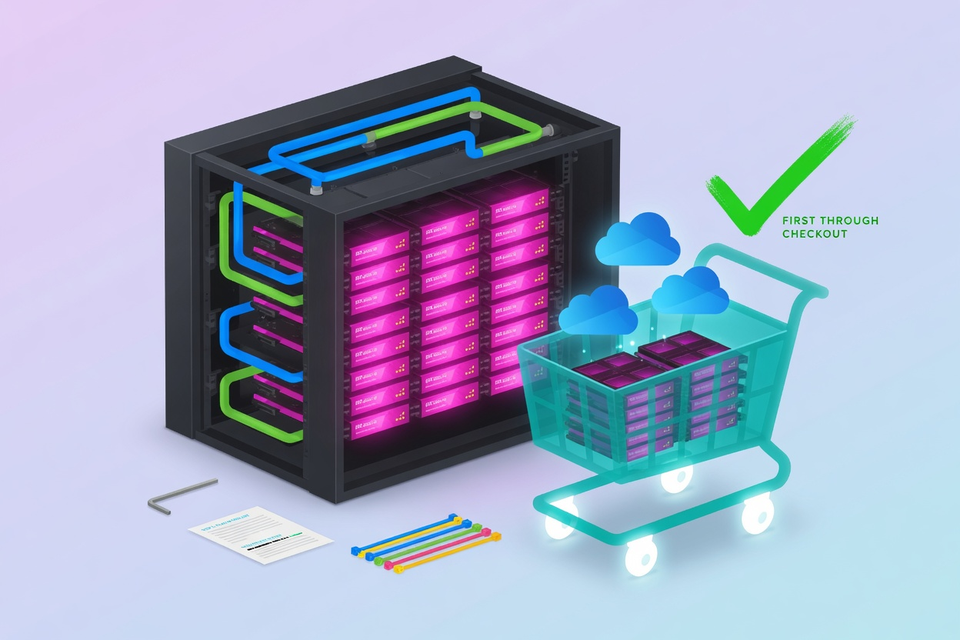
AMD has started selling artificial intelligence computers by the rack, and Microsoft is first through the checkout. The new system, called Helios, packs 72 of AMD's Instinct MI455X accelerators into a single liquid-cooled cabinet, and Microsoft says Azure will deploy the racks at scale, the first cloud provider to commit publicly. I have assembled flat-pack furniture with fewer parts than a modern server, so I understand the appeal of buying the room pre-built.
For years AMD sold the chips and left customers to engineer the cabinet around them. Helios flips that arrangement. The accelerators, the sixth-generation EPYC processors code-named Venice, the Pensando networking silicon, the cooling loops and the ROCm software all arrive as one designed unit. It is the difference between buying seventy-two espresso machines and buying a working cafe.
The numbers deserve a slow read. SiliconANGLE reports that each MI455X carries 432 gigabytes of HBM4, the stacked memory that sits directly beside the processor so data commutes micrometers instead of centimeters, and that the Venice processors are built on TSMC's two-nanometer process. Memory capacity per accelerator is the quiet battleground here: the bigger the model that fits next to one chip, the less time a cluster spends passing pieces of it around the network.
On the Azure side, the racks surface as ND MI455X v7 virtual machines aimed at inference, search and agentic workloads. Two processor-only families ride along, HDv2 for data-heavy pipelines with up to 500 cores per machine and HXv2 for chip-design work. Mark Papermaster, AMD's chief technology officer, says in Microsoft's announcement: "Azure HX is an important platform for scaling complex EDA workloads, and we're excited about Azure HXv2, which is designed to deliver even greater performance and scalability." StorageReview reports first systems reaching Microsoft in the second half of 2026.
The bet underneath the launch is bigger than any single specification. Nvidia already sells full racks, and CNBC frames Helios as AMD's first system built to rival them at that scale. AMD's wager is that a cloud operator would rather compare two complete cabinets on open standards than tune a proprietary cluster, and that memory capacity will matter more with every generation of ever-hungrier models. Whether that wager pays depends on volume, and volume now has a named customer.
What changes immediately is procurement. A cloud that once had a single realistic vendor for frontier-scale racks can now put two finished designs side by side and argue about price. If Helios ships on schedule this year, the interesting question stops being whether AMD can build a rack and becomes how many of them Azure decides to fill.




Leave a Reply