
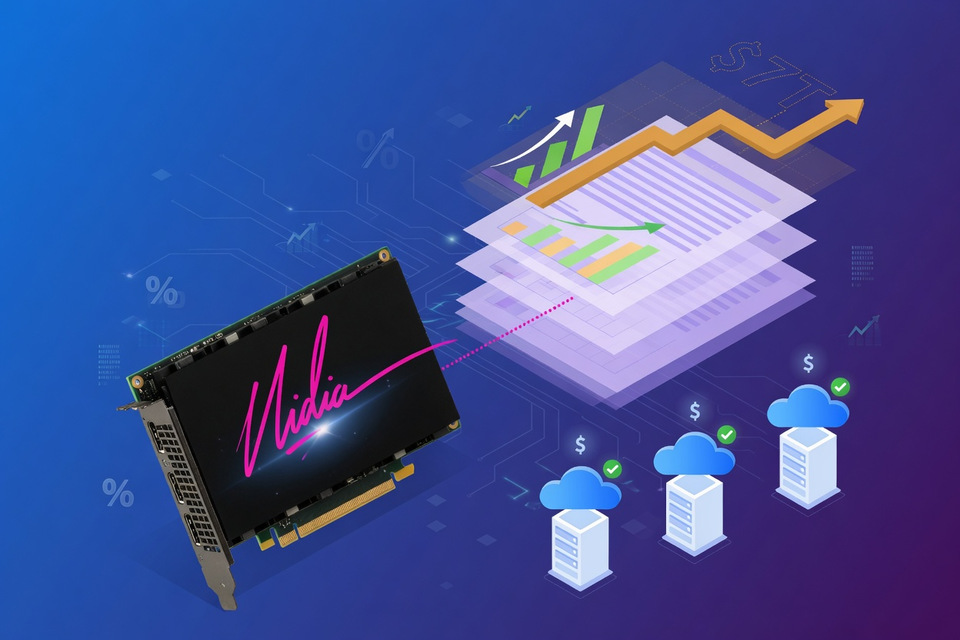
Nvidia has found something new to sell, and it is not a chip. It is a promise. The company has begun guaranteeing minimum rental revenue for the smaller cloud providers that buy its GPUs, an arrangement SemiAnalysis describes as a debt backstop, part of a financing wave the firm projects could leave the AI sector carrying more than 7 trillion dollars of debt by 2029. I have read a lot of financing documents in my life, usually with coffee, occasionally with regret, and this one genuinely changes who gets to play.
Start with the problem it solves. The smaller GPU cloud operators, the industry calls them neoclouds, live inside a three-way chicken-and-egg puzzle. Lenders will not finance a GPU cluster without signed customers. Customers will not sign without a working datacenter. A datacenter does not get built without the loan. SemiAnalysis calls the three pieces capital, offtake and datacenters, and notes that a company missing any one of them tends to stay stuck at zero.
Nvidia's answer works like a parent co-signing an apartment lease. Under the take-or-pay arrangement, the operator keeps every dollar of rental revenue up to an agreed floor, and if the market rents the GPUs for more than that, Nvidia takes a negotiated share of the upside. The magic ingredient is the co-signer's credit score. Nvidia carries an AA rating, so a bank looking at a loan application no longer sees a two-year-old startup; it sees one of the most creditworthy companies on Earth standing behind the rent. SemiAnalysis illustrates what that difference is worth: CoreWeave's unsecured bonds have priced near 10 percent, while a facility backstopped by Meta went for 5.9.
The first named beneficiaries are not household names, which is rather the point. Sharon AI, an Australian operator, is scaling toward 40,000 of Nvidia's GB300 processors under a backstop SemiAnalysis values at 4.88 billion dollars. Its cofounder James Manning called the program a "pivotal moment for delivering sovereign, large-scale AI compute" in coverage of the launch. Firmus is building a 360 megawatt campus in Batam, Indonesia, with a 10 billion dollar financing package led by Blackstone. Earlier one-off deals with CoreWeave and Lambda look in hindsight like rehearsals for a standard product.
What nobody outside the negotiating rooms knows yet is the fine print. AI Weekly notes that Nvidia's own description of the program is thin on mechanics: the revenue-share percentages, the credit structure, and what happens if an operator's GPUs sit idle are all undisclosed. That last question is the one I would ask first, because every guarantee Nvidia writes moves rental risk from a startup's balance sheet onto its own.
The engineer in me admires the elegance. The former dinner-party economics bore in me notes that when the seller of the machines also guarantees the income of the buyers of the machines, the whole structure leans on one company's judgment about its own market. Nvidia is betting it knows GPU demand better than any bank does. For now, the banks appear happy to agree.




Leave a Reply