
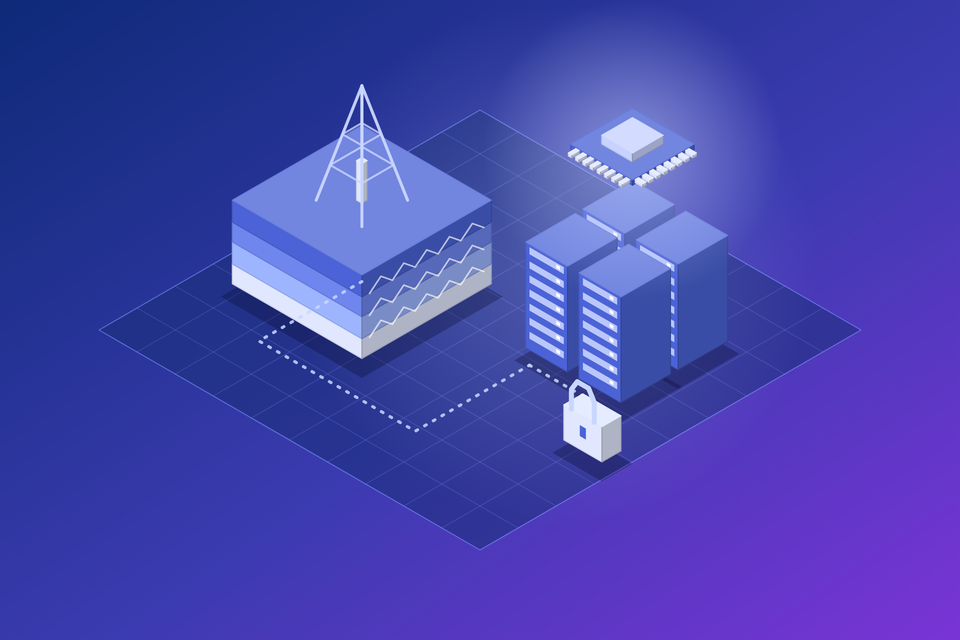
GeoComputing Group has announced AViR, a language-model service for oil and gas technical teams that runs on its RiVA cloud platform, in a release dated October 13 from Houston. The pitch is placement: the models run locally, next to the data and the high-performance computing the geoscience applications already use, in a private environment the customer controls.
RiVA is the foundation. GeoComputing describes it as a platform that puts high-performance computing close to the data petro-technical workflows depend on, and says AViR extends it with locally hosted language models designed for private, in-country operation. For an infrastructure team, that last phrase is the data-sovereignty argument: inference stays inside a jurisdiction instead of going to a third-party AI service.
The company lists three advantages. The first is knowledge retrieval: users can query seismic data, well logs, engineering reports, geological studies and other technical documents, with existing user access controls and data governance preserved. That is the detail a security reviewer will probe first, because a retrieval layer is only as safe as its permission model. The second is proximity. Running models beside primary data and compute is meant to minimize data movement and reduce latency, and to give geoscientists and engineers dedicated AI resources when they need them. The third is cost. GeoComputing says inference on owned infrastructure replaces metered fees from third-party AI services, which makes spending more predictable as adoption spreads across exploration, production and technical workflows.
John Creevan, GeoComputing’s chief executive, framed it as a question of control. "Lost in the AI discourse is often the premise that where intelligence runs matters just as much as what it can do," he said. "Energy organizations need to retain control over their most valuable data while leveraging AI tools or the entire process is for naught."
The release also restates what RiVA is meant to fix: poor system performance, complex environments, massive data volumes, dispersed teams, limited technical support and high deployment costs. GeoComputing says RiVA’s high-throughput architecture and streamlined deployment turn tasks that once took days into hours, and that the platform includes an integrated disaster recovery solution for continuity and data resilience. Those are company claims; the release gives no benchmark, workload or customer to test them against.
What the release leaves out is what a buyer would need to size this. It does not name the language models AViR runs, the GPU or server hardware behind them, the hosting locations that count as in-country, the price, or when AViR is available. Nor does it say whether the cost advantage assumes the customer owns the infrastructure or GeoComputing hosts it on RiVA. Those answers decide whether predictable AI economics means a capital purchase or a fixed-fee service.
GeoComputing, founded in 2004, describes itself as an IT consultancy for oil, gas, energy and other geoscience companies, with services spanning solution design, project management, infrastructure, application support and data management, and follow-the-sun support around the clock. More information is on the company’s products page.



Leave a Reply