
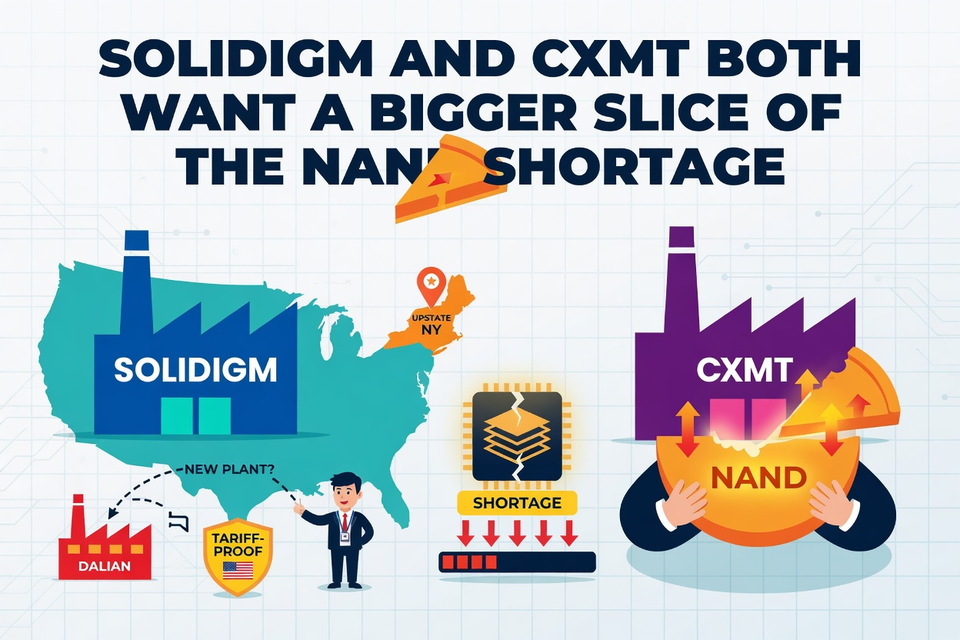
Solidigm, the NAND flash unit of SK Hynix, is weighing a US factory, with upstate New York emerging as the leading site under consideration, according to people familiar with the discussions. A US plant would cut Solidigm's dependence on its only NAND production facility, in Dalian, China, and would shield the company from potential US tariffs and from curbs on exporting chipmaking equipment into China. The move also lines up with pressure from the Trump administration to bring more semiconductor manufacturing onshore. Asked about the plan, SK Hynix said only that its subsidiary is reviewing options to strengthen its competitiveness and that no specific decision has been made, language that echoes the company's response two days earlier to a separate report that it was in talks with Intel about making memory chips at Intel's Ohio site. Neither project has moved from talks to a signed agreement, and key details of the New York plan remain unsettled.
A second Chinese memory maker is chasing the same shortage from a different angle. CXMT, which has built its business on DRAM, is setting up a research and development line for NAND flash at a new Beijing plant, according to people with knowledge of the plan, a first step toward the flash memory market that Samsung and SK Hynix currently dominate. It is not yet clear when that line would start running, or whether CXMT intends to carry it from research into large-scale commercial output. The move would put CXMT up against YMTC, the domestic NAND leader it has long avoided competing with directly, and the two firms are widely called China's "twin stars" of memory manufacturing for exactly that reason. That separation has already begun to blur: YMTC sent low-power DRAM samples to customers earlier this year as it explored CXMT's home turf. CXMT is flush with capital to make the attempt, having raised 57.92 billion yuan, or roughly $8.6 billion, in July in Asia's biggest initial public offering of the year, and it is reportedly planning a second Beijing chip plant on top of the NAND research effort. Samsung still held 29.3 percent of NAND revenue in the second quarter, ahead of SK Hynix and Micron, but both Chinese firms have found they can charge some customers more than their larger foreign rivals while supply stays tight.
The subject underneath both stories is the same one that has driven memory pricing all year: demand from AI servers has outrun supply, and manufacturers have kept steering capital toward DRAM and high bandwidth memory rather than NAND, leaving flash capacity comparatively starved even as the shortage widens. Industry forecasters do not expect that to ease until deep into next year at the earliest, which is what makes a new NAND line in New York or Beijing a bet on where the shortage still has room to run rather than a response to a shortage that has already passed.




Leave a Reply