
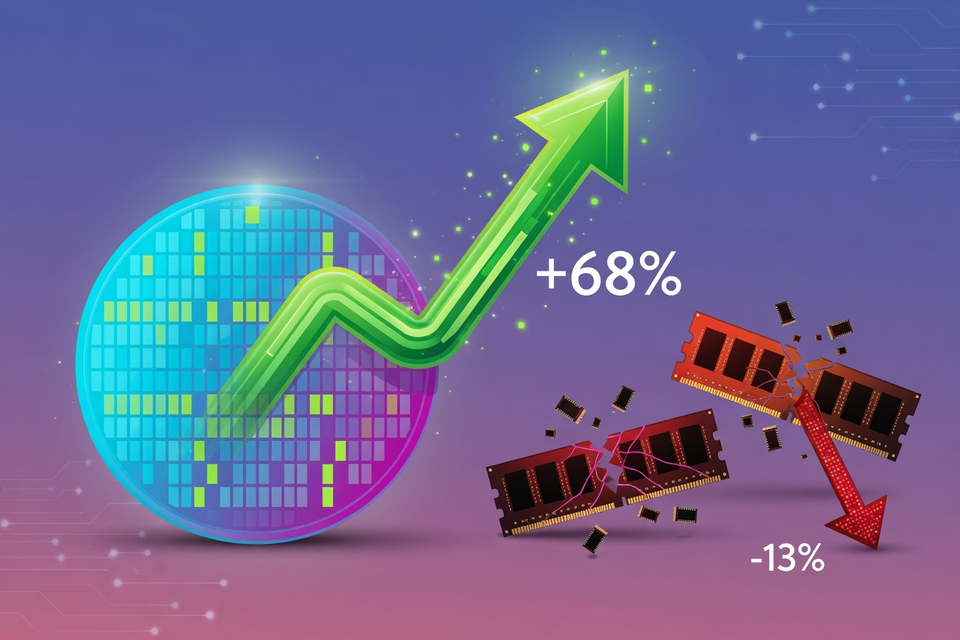
TSMC reported June revenue of NT$442.68 billion, about 14.5 billion US dollars, up 67.9 percent from a year earlier, and I want you to sit with that number for a second. This is a 39-year-old industrial company growing like a two-year-old startup, on the same Monday that SK Hynix, one of the companies that supplies the memory sitting next to TSMC's chips, fell 13 percent.
A foundry, for anyone new to this corner of the industry, is a factory that builds chips other companies design. Think of TSMC as the only kitchen in town that can cook for the world's fussiest restaurants. Nvidia, AMD and Apple all bring their recipes, and lately every one of them wants the same burner.
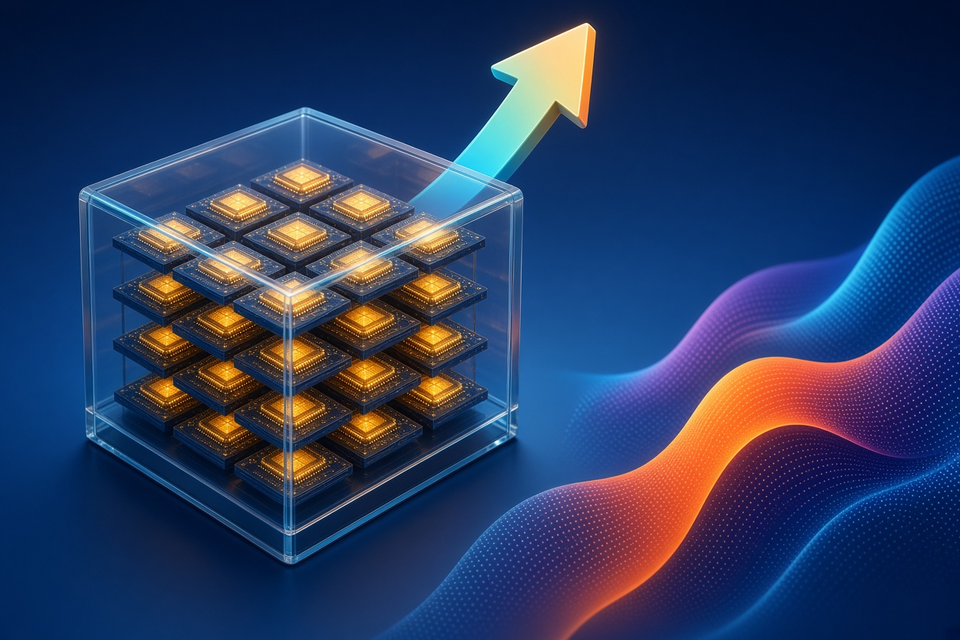
That burner is N3, TSMC's 3-nanometer production line, which 24/7 Wall St. reports is sold out. The same report says three new advanced packaging facilities in Chiayi are projected to generate more than NT$300 billion in annual output and create roughly 9,000 jobs. Packaging is the unglamorous step where finished chips get bonded together into one module, and it has quietly become the choke point of the whole AI supply chain. I once described packaging at a family dinner as gift-wrapping, which is wrong in every way that matters, so let me atone: it is closer to assembling a sandwich where each layer is a working computer and the mayonnaise conducts electricity.
The memory side of the table had a rougher session. Beyond the SK Hynix drop, the same coverage notes Micron, SanDisk and Western Digital had already fallen about 6 percent in the preceding selloff. Memory prices move like commodity prices, in booms and gluts, while foundry revenue behaves more like rent on the only building in town. June made the difference visible in a single trading day.
Investors watching the divergence got one more data point to argue over. Morgan Stanley kept its overweight rating on TSMC with a price target of 288 dollars, pointing to demand from AI labs, hyperscalers, sovereign AI projects and the newer cloud providers built specifically for GPU rental. Whether the memory slump is a pause or a turn is the open question, and I am not going to pretend to answer it for anyone.
The fuller picture arrives when TSMC reports complete second-quarter results on July 16. A monthly sales figure is a single frame from a film. It happens to be a spectacular frame, and the memory makers are hoping the next scene looks kinder to them.


Leave a Reply