
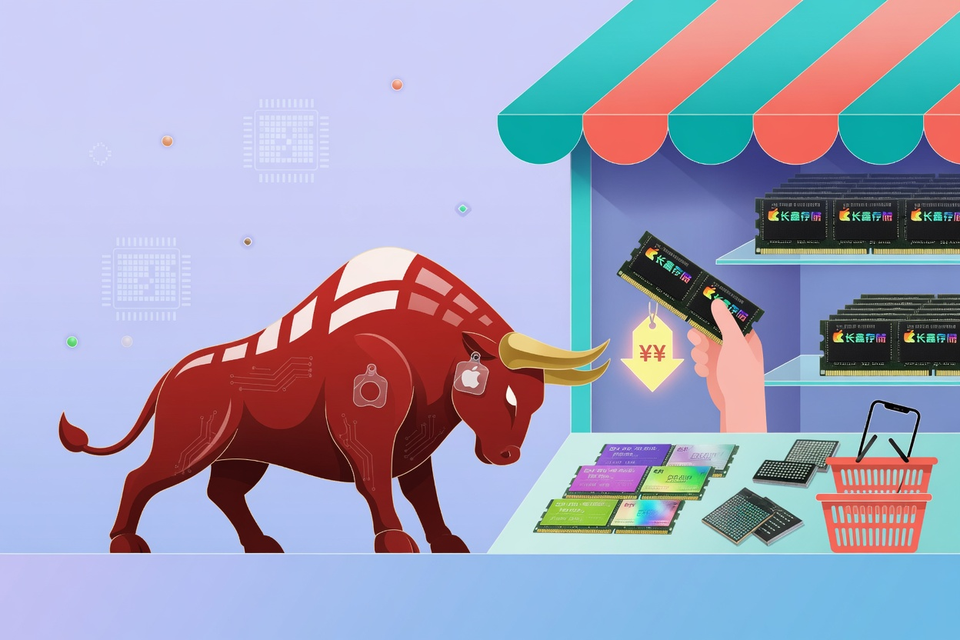
Apple has begun testing DRAM from ChangXin Memory Technologies for devices sold in China, the Financial Times reports, and the world's most deliberate component buyer running qualification on a fourth memory supplier says more about pricing than about patriotism.
The testing is the technical validation stage that normally precedes approval for production use. No commercial commitment exists, per the report, and Engadget notes the scope is limited to hardware destined for the Chinese market. That caveat matters less than it looks. Qualification is the slow, expensive part of adding a memory vendor; once a part is qualified, volume decisions become a purchasing conversation rather than an engineering project.
The timing explains itself. Standard DRAM contract prices rose an estimated 55 to 60 percent in early 2026 on AI server demand, according to MacRumors, and Apple has already raised prices across much of its hardware lineup while sourcing from all three incumbent suppliers. When a buyer of Apple's scale is paying up despite multi-sourcing from Samsung, SK hynix and Micron, the problem is not vendor selection. It is that all three sell into the same shortage.
CXMT is the fourth-largest DRAM producer, holding roughly 11 percent of global DRAM wafer capacity in 2025, with trade estimates projecting around 15 percent by 2028 as fabs in Hefei, Shanghai and Beijing come online. Those bits exist outside the incumbents' allocation math. A qualified CXMT part, even one shipping only in Chinese devices, frees incumbent supply for everything else and gives Apple a number to put on the table in every contract negotiation.
The complication is Washington. The Pentagon added CXMT to its 1260H list in June, designating it as linked to the Chinese military, per Engadget. That listing bars Defense Department contracting but does not prohibit commercial purchases, which leaves Apple room to test while the policy question stays open. The company has not said which products the chips might reach, and the sensible reading is that it is buying options, not committing to them.
For the memory incumbents, the discomfort is arithmetic rather than immediate. CXMT sells commodity DDR and LPDDR at the trailing edge, not HBM, so the AI premium tier is untouched. But commodity DRAM is exactly where a subsidized entrant with 15 state-owned shareholders and a planned IPO targeting about 4.3 billion dollars can price to win share, and where Samsung, SK hynix and Micron have historically harvested margin to fund everything else.
Bootnote: CXMT was a domestic-market afterthought until the current shortage pulled it into international relevance. Its NAND counterpart YMTC sits on the Commerce Department's Entity List, a materially harsher designation that requires export licenses for US suppliers. The gap between those two lists is the space Apple is currently operating in.




Leave a Reply