
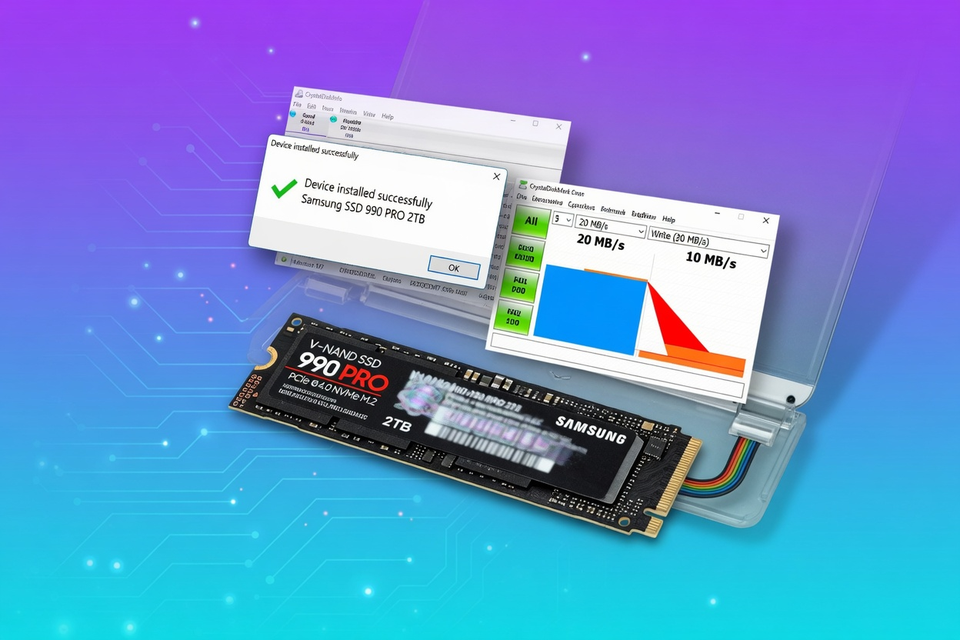
A counterfeit Samsung 990 Pro 2TB, bought new from a local distributor in India, cleared Windows, cleared CrystalDiskInfo and cleared its own firmware string before CrystalDiskMark caught it managing sequential reads of 20 MB/s and writes of 10 MB/s.
Tom's Hardware reports the buyer paid around $205. That number is the first thing a specialist should have flinched at. The 990 Pro 2TB launched at a $309.99 MSRP three years ago and still lists at $299.99 through the NAND shortage, and while it has touched $159.99 at its historic low, nothing was moving 32 percent under street price in this market. Discounts run the wrong way in a shortage, and a distributor holding cheap inventory of a flagship TLC drive is a story in itself.
The identity spoof is the part worth studying. Windows reported the correct product name and the correct 2TB capacity. CrystalDiskInfo initially agreed and showed firmware 0B2QJXD7, which is outdated but is the revision the 990 Pro originally shipped with. Whoever built this drive did not guess at a plausible string; they copied a real one, which retires every host-side identity check as a screening tool.
CrystalDiskInfo produced the first genuine discrepancy by reporting the drive on a PCIe 3.0 link. The 990 Pro is a PCIe 4.0 part. Link negotiation is a conversation between controller and host rather than a field in a descriptor table, which is why it broke the illusion when the model name did not.
Then the benchmark settled it. Sequential figures of 20 MB/s and 10 MB/s are not a real NVMe SSD having a bad day, and they are below what an old USB 2.0 pen drive turns in. That performance profile belongs to whatever cheap controller and flash the counterfeiter had on hand, dressed in a 990 Pro's paperwork.
Samsung Magician was the check that actually worked, flagging the drive as a counterfeit clone. The lesson for buyers is unglamorous and specific: vendor authentication tooling is now the only reliable acceptance test at the desk, and it needs running inside the return window rather than at the first failure six months later.
Visual inspection is finished as a control. Tom's Hardware notes the usual tells, wrong model names, misaligned text and poor print quality, were absent, and that the label carried correct information with clean text and logo work good enough to fool experienced enthusiasts. Goods-in teams checking cartons by eye are checking the one thing the counterfeiter optimised hardest.
The channel detail matters more than the drive does. This was not a marketplace listing or a used sale; it was a new unit from a local distributor, which puts the fake somewhere upstream of the customer and inside a supply chain that a corporate buyer would treat as legitimate. Tom's Hardware advises waiting out the pricing, buying from reputable retailers, filming the unboxing and running authentication software immediately on drives that ship with it. For anyone procuring flash at volume this quarter, the serial-level check is the only part of that advice that scales.
Bootnote: this is not the first run at it. The same report recalls a wave of counterfeit Samsung SSDs that flooded e-tailers overseas a couple of years ago, before the current shortage gave the practice a much better margin.




Leave a Reply