
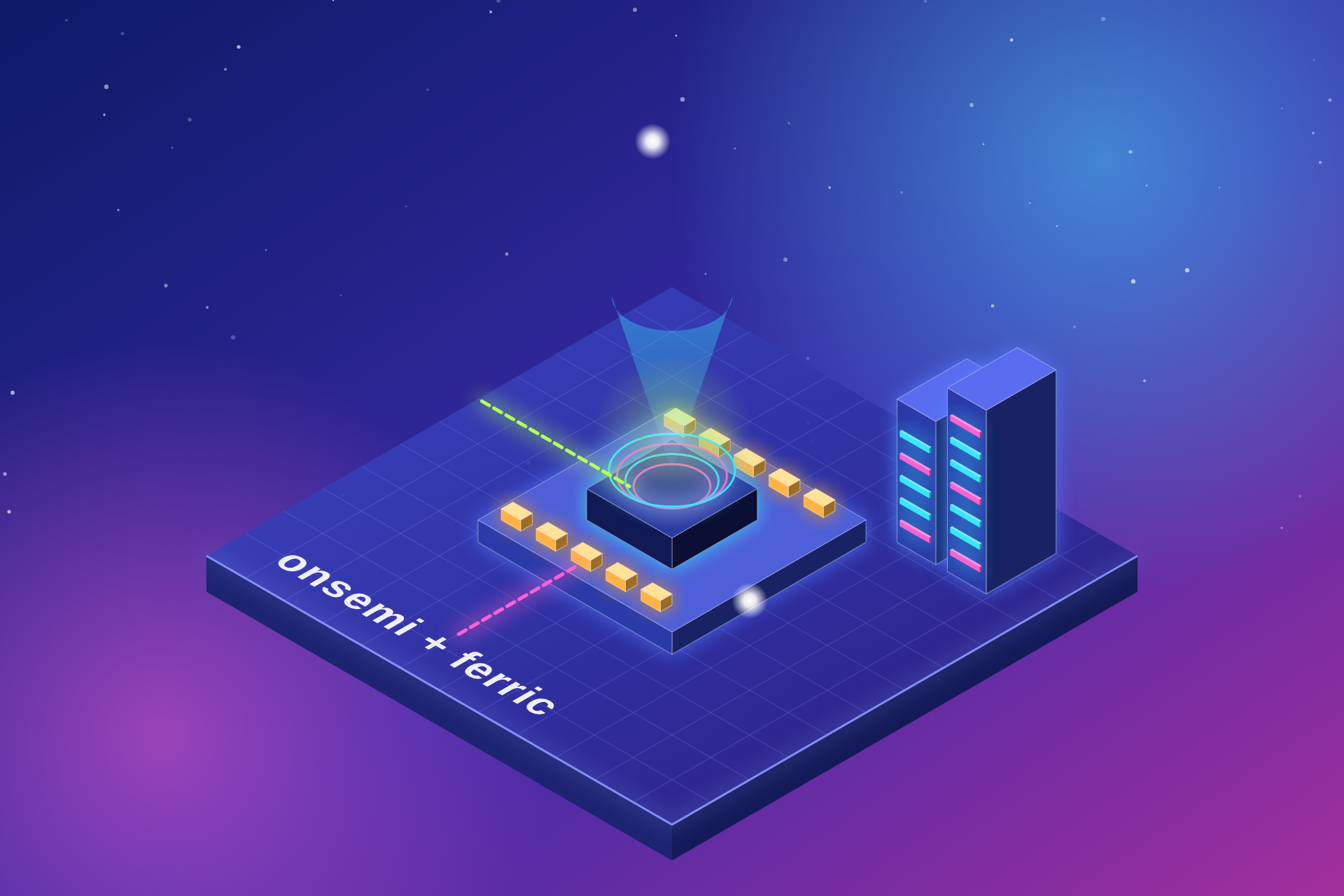
onsemi has agreed to acquire Ferric, a developer of integrated voltage regulator technology, to strengthen its position in power delivery for next-generation AI processors. The company will pay $600 million in cash at closing, plus up to $175 million in additional cash tied to revenue milestones, funded from cash on hand. The transaction is expected to close by the end of 2026, subject to customary closing conditions.
The announcement, made Monday, November 2, centers on a part of the AI data center that rarely makes headlines but sets a hard limit on how fast chips can grow: getting clean, stable electricity to the processor itself.
An integrated voltage regulator, or IVR, brings the components that convert and control power into a single compact package. Ferric’s design combines the power controller, transistors, inductors and capacitors, which are usually separate parts spread across a circuit board. The company says that approach reduces the board area needed for regulation by 50 to 70 percent compared with conventional discrete regulators.
Ferric brings more than a decade of experience in IVR technology and magnetics, along with more than 40 patents. About 50 employees, based mainly in New York and Silicon Valley, are expected to join onsemi as part of the transaction.
AI processors draw far more current than the chips of a few years ago, and their demand changes quickly as workloads shift. Delivering that power over a long path across a board wastes energy and slows the system’s response. The industry trend is to move voltage regulation closer to the processor, which reduces losses and lets the supply react faster to changes in demand.
That shift has made power delivery a strategic product category. Companies that supply power semiconductors now find themselves in conversations once reserved for processor and memory vendors, because each new generation of accelerators raises the bar for efficiency and density.
onsemi says the acquisition lifts its ambitions in that market. The company raised its 2030 revenue target for AI data centers by $500 million, to more than $3 billion. It expects the deal to add to long-term revenue growth, gross margin and earnings per share at scale, with no meaningful near-term financial impact.
“The rapid growth of AI is reshaping the requirements for power delivery,” said Hassane El-Khoury, president and CEO of onsemi, in announcing the agreement.
Noah Sturcken, founder and CEO of Ferric, said the company believes integrated power architectures will play an increasingly important role in the future of AI data centers. For a founder-led technology company, joining a larger manufacturer offers a route to the production scale and customer relationships that a data center supply chain demands.
Board space is one of the quiet constraints of an AI server. Every component that supports the processor competes with memory, networking and cooling for room near the chip. By combining the controller, power transistors and magnetic parts in one package, an integrated regulator frees space and shortens the distance electricity must travel, which is where much of the loss and delay occurs.
For onsemi’s customers, the appeal is a more compact route to a stable supply as processors grow more power-hungry. A design that needs fewer discrete parts can also simplify layout and testing, and that matters when system makers are racing to bring new accelerators to market.
Integration planning will determine how quickly Ferric’s technology appears in onsemi’s products. Details on specific product roadmaps and customer timelines are still to come, and the milestone structure ties part of the price to revenue the technology generates.
For data center designers, the practical question is how much of the power chain can be collapsed into smaller, more efficient packages. Every square millimeter freed near the processor can be used for additional compute, memory or cooling, and every percentage point of efficiency compounds across thousands of racks.
The deal also shows how acquisition activity in AI infrastructure is spreading beyond the headline names. Alongside large transactions in networking and optics, smaller deals in power and packaging are positioning suppliers for the next generation of accelerators. A modestly sized purchase of a team with a decade of magnetics expertise can matter as much to a product roadmap as a far larger one.
Power electronics is a field where incremental gains matter. A few percentage points of efficiency, applied across the hundreds of thousands of processors in a large AI campus, translate into meaningful reductions in wasted energy and heat, which are two of the largest operating costs facing data center builders.
For onsemi, the transaction adds specialized engineering talent and patents to a business that already serves data center power. For Ferric, it offers the backing of a company with global manufacturing and a wide customer base. Together, they are making the case that the path to faster AI chips runs through the power rails as much as through the processors themselves.



Leave a Reply